
Renovating a Melbourne property can look straightforward on paper. Then someone needs to drill through a concrete slab, chase a wall or core a section of floor – and suddenly that innocent-looking slab becomes a bit of a mystery box.
I always recommend treating concrete as something you investigate before you cut. Electrical cables, plumbing pipes, reinforcement and other embedded services can sit beneath the surface, completely invisible to the eye.
Locate Hidden Services Before Work Begins
If you need to locate hidden services before drilling or coring, Concrete Scanning can help you understand what sits inside the concrete before work begins.
For electrical contractors, this matters because drilling into an unseen cable can create a serious safety issue, damage an installation and potentially bring the job to an abrupt halt. A few minutes of preparation can prevent a much bigger headache.
Why Plumbing Work Needs Extra Care
Plumbing work creates a similar challenge. Pipes can run through slabs, walls and other concrete structures, particularly in renovated bathrooms, kitchens, apartments and commercial buildings.
You may know where the pipe should be, but that does not always mean you know where it actually is.
Build a Clearer Picture Before Cutting
That is where modern concrete scanning technology earns its place. Instead of relying entirely on old drawings, visual clues or a confident guess, I can use scanning information to build a clearer picture of what lies beneath the surface.
And honestly, guessing where a pipe or cable sits inside concrete is not a particularly clever construction strategy. Concrete has a great memory for mistakes – especially when the repair involves cutting it open again.
Understand the Risks Before Drilling
Before electrical or plumbing contractors start drilling, coring, chasing or cutting, they need to understand the risks involved.
WorkSafe Victoria highlights hazards associated with concrete cutting and drilling, including potential damage to electricity and services. WorkSafe Victoria’s safe concrete cutting and drilling guidance
What Is Concrete Scanning?
Concrete scanning uses specialised detection equipment to identify objects and services hidden inside or beneath concrete. Depending on the equipment and site conditions, scanning can help locate items such as electrical conduits, plumbing pipes, reinforcement bars and other embedded features.
I see it as creating a kind of underground map for a concrete surface.
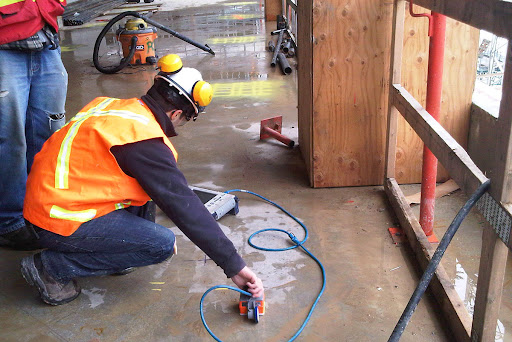
The scanning process does not mean someone simply waves a device over the slab and magically knows everything underneath. A trained operator interprets the information collected from the scan and marks relevant findings on the surface so the trade team can plan its work more carefully.
For electrical and plumbing projects, that information can make a major difference before anyone reaches for a core drill.
Why Electrical Contractors Need Concrete Scanning
Electrical work often involves drilling, anchoring, coring and installing equipment. Contractors may need to create openings for conduits, cable routes, switchboards, lighting systems or other electrical infrastructure.
The problem starts when an existing electrical cable sits directly in the proposed drilling path.
1. It helps locate hidden electrical services
An electrical cable hidden inside concrete does not come with a warning label. Scanning can help identify potential cable routes before drilling begins.
That gives the electrical contractor better information about where they can work and where they should avoid.
2. It supports safer drilling
A drill meeting an unexpected cable can create a dangerous situation. It can also damage equipment and interrupt the job.
By identifying potential hazards before drilling, contractors can make more informed decisions about the location and depth of their work.
3. It helps protect existing installations
Imagine upgrading an office, apartment or retail space and accidentally damaging an existing electrical route hidden inside the slab.
The original installation may have worked perfectly for years. One badly positioned hole can change that very quickly.
Scanning helps contractors work around existing services instead of discovering them the hard way.
Why Plumbing Work Also Needs Concrete Scanning
Plumbing projects often involve more than connecting a few pipes under a sink.
Bathroom renovations, commercial refurbishments and apartment upgrades can require drilling or cutting through concrete floors and walls. Existing water pipes, drainage lines and other services may run through these areas.
That creates a simple question: Where exactly can I drill?
Concrete Scanning can help answer that question before the work starts.
Avoid damaging concealed pipes
A hidden water pipe can turn a simple drilling job into an unwanted indoor swimming pool.
Even a relatively small pipe strike can cause water damage, delays and additional repair work. Locating potential pipe routes first gives plumbers a better understanding of the area they need to work in.
Plan core holes more effectively
Plumbers sometimes need core holes for pipe penetrations, drainage routes and other installations.
Instead of selecting a location based only on the visible layout, scanning can provide additional information about the concrete and its embedded services.
That allows the plumber and other contractors to coordinate the proposed opening with greater confidence.
Reduce unnecessary rework
Nobody wants to finish a job, discover a problem and then start cutting the same area open again.
Better information before drilling can reduce the chance of avoidable mistakes and help keep the project moving.
Concrete Scanning vs Guesswork
There is a big difference between knowing where something is and assuming where it is.
Old building plans can help, but renovations and previous modifications may have changed the original layout. A property might also have gone through several stages of electrical and plumbing upgrades over the years.
Here is how I would look at the difference:
| Approach | What it provides | Main limitation |
| Old plans | Historical layout information | May not reflect later changes |
| Visual inspection | Visible clues | Cannot see through concrete |
| Basic detection | Some service information | Results depend on conditions and equipment |
| Concrete scanning | Subsurface information | Requires skilled interpretation |
This does not mean scanning replaces plans, drawings or professional judgement. Instead, I see it as another layer of information that can help contractors make better decisions.
When Should You Scan Concrete?
You do not necessarily need to scan every square metre of concrete on every project.
However, I would strongly consider scanning before work that involves drilling, coring, cutting, chasing or anchoring into concrete, particularly when the location of embedded services is uncertain.
Common situations include:
- Electrical conduit installation
- Plumbing penetrations
- Bathroom renovations
- Kitchen renovations
- Commercial fit-outs
- Core drilling
- Concrete wall drilling
- Slab penetrations
- Mechanical and electrical installations
- New service routes
- Installing anchors or fixings
The earlier you identify potential conflicts, the more options you have.
What Can Concrete Scanning Detect?
The exact results depend on the scanning method, equipment, concrete conditions and depth of the target.
Depending on the project, scanning may help identify:
- Electrical conduits
- Electrical cables
- Plumbing pipes
- Reinforcing steel
- Post-tensioning elements
- Voids
- Embedded objects
- Other anomalies within concrete
One important point: scanning is not a crystal ball. Different materials, depths, concrete conditions and site environments can affect detection.
That is why experienced interpretation matters just as much as the equipment itself.
How Does the Process Work?
A typical scanning job starts with understanding what you plan to do.
For example, if a plumber needs to core a 100 mm opening through a concrete slab, the operator needs to know the proposed location and intended work.
The scanning area can then be assessed using suitable detection equipment.
The operator scans the relevant section and interprets the data to identify potential embedded services or structural elements. Findings can then be marked on the concrete surface so the trade team can see areas of concern.
From there, the contractor can review the proposed drilling location and decide whether to proceed, adjust the position or investigate further.
That simple process can make site coordination much easier.
Why Melbourne Projects Can Benefit From Better Planning
Melbourne has a huge mix of residential renovations, apartment buildings, commercial properties and older structures.
That variety creates its own challenge. You may work on a relatively new building one day and a heavily renovated property the next.
Previous owners and contractors may have added new electrical circuits, plumbing routes, air-conditioning systems and other services over time.
The concrete itself might look unchanged, but what sits inside it may tell a very different story.
That is why I prefer a measure-first, drill-second approach whenever hidden services could create a risk.
Does Concrete Scanning Replace Building Plans?
No. I would never treat scanning as a replacement for drawings, service plans or professional judgement.
Instead, use the information together.
Start with available plans and documentation. Speak with the relevant electrician, plumber, builder or engineer. Then use scanning where you need additional information about the actual condition of the concrete.
This layered approach gives your project team more information before making a potentially irreversible cut.
How Scanning Can Save Time
At first glance, adding another step before drilling might seem like it slows a project down.
In practice, planning can prevent much longer interruptions.
Consider a simple scenario: an electrician needs to drill several holes for a new installation. Without sufficient information, the team discovers an obstruction after starting work.
Now someone needs to stop, investigate the problem, change the drilling location, organise repairs and potentially coordinate with another trade.
The original five-minute decision can become a much longer site problem.
Concrete Scanning can help reduce that uncertainty before the drill touches the slab.
What Should You Ask Before Booking a Scan?
If you’re arranging scanning for electrical or plumbing work, I recommend asking a few practical questions:
- What area needs scanning?
- What type of work will happen after scanning?
- How deep does the proposed drilling or coring need to go?
- Are there existing plans available?
- What services do you need to locate?
- How will findings be marked or communicated to the contractor?
- Does the scanning team have experience with this type of concrete work?
Clear information helps the scanning technician understand what your project actually needs.
Common Mistakes to Avoid
The biggest mistake is treating a concrete surface as if it contains nothing important.
Other common mistakes include relying solely on outdated drawings, drilling before checking the area, assuming a previous renovation followed the original plans and failing to communicate scanning results to the trade team.
I also recommend avoiding the temptation to say, “It should be right here.”
“Should” is not a particularly strong engineering measurement.
Conclusion
Electrical and plumbing work often looks simple from the outside. Behind the scenes, however, concrete can contain a maze of cables, pipes, reinforcement and other hidden elements.
I see Concrete Scanning as a practical way to gather better information before drilling, coring or cutting. It can help contractors plan their work, avoid potential service conflicts and reduce unnecessary disruption.
If you’re preparing for electrical, plumbing, renovation or core drilling work in Melbourne, don’t leave the location of hidden services to chance. Plan first, scan where appropriate, and drill with better information.
Ready to organise your next scan? Get in touch with our team to discuss your project and find out how scanning can support your planned concrete work.
Frequently Asked Questions
Is Concrete Scanning necessary before electrical drilling?
If electrical drilling could encounter concealed cables, conduits or other embedded services, scanning can provide useful information before work begins. The appropriate approach depends on the site, proposed work and available service information.
Can Concrete Scanning find plumbing pipes?
Concrete Scanning can help identify potential pipes and other objects within concrete, depending on the material, depth, scanning technology and site conditions.
Can scanning detect electrical cables?
Yes, suitable scanning and detection methods can help identify potential electrical services within concrete. The operator needs to interpret the results correctly and account for site conditions.
Can Concrete Scanning find reinforcement?
Scanning technology can help identify reinforcement within concrete. This information can prove useful when planning drilling, coring and other penetrations.
Should I scan before core drilling?
If the proposed core hole could intersect hidden services or structural elements, scanning beforehand can provide valuable information for planning the location.
Is scanning useful for bathroom renovations?
Yes. Bathroom renovations often involve plumbing penetrations, drainage work and drilling through floors or walls. Scanning can help identify potential hidden services before these works begin.
How accurate is Concrete Scanning?
Accuracy depends on the scanning technology, concrete composition, target depth, site conditions and operator interpretation. No scanning method should be treated as a guarantee that every concealed object will be detected.