Choosing a Core Drilling Company can feel like a simple box to tick. You need a hole in concrete, so you call someone, right? Not quite. The quality of the drilling can affect your schedule, surrounding finishes, site safety and the next trade waiting to get started.
When I look at professional concrete drilling work, I focus on more than a sharp bit and a powerful machine. I look for experience, accurate equipment, safe work practices, clear communication and a team that understands what happens before, during and after the drill.
For Melbourne projects, I’d start by checking whether the Core Drilling Company has experience with the type of work you actually need. A residential bathroom penetration has very different demands from a commercial service riser, electrical penetration or a large structural opening.
Why Experience Matters in a Core Drilling Company
A good drilling contractor should also understand the site, not just the concrete. Before anyone starts drilling, the team should consider the location of the opening, slab or wall thickness, access, nearby services and the requirements of other trades. That preparation can save you from the classic construction headache: discovering a problem only after the expensive bit starts spinning.
Experience matters because concrete drilling rarely happens in a perfect, empty room. Melbourne sites can involve tight access, occupied buildings, existing services, reinforced slabs and strict project schedules. A seasoned Core Drilling Company knows how to adapt without turning a straightforward job into a full-blown site drama.
Safety Should Be a Priority for Your Core Drilling Company
Safety deserves equal attention. Drilling concrete can generate respirable crystalline silica dust, so I want to see sensible dust-control measures, suitable equipment and workers who understand their WHS responsibilities.
For silica guidance, I recommend checking the current information from Safe Work Australia, particularly when your project involves concrete drilling or other dust-generating work.
Check the Equipment Used by a Core Drilling Company
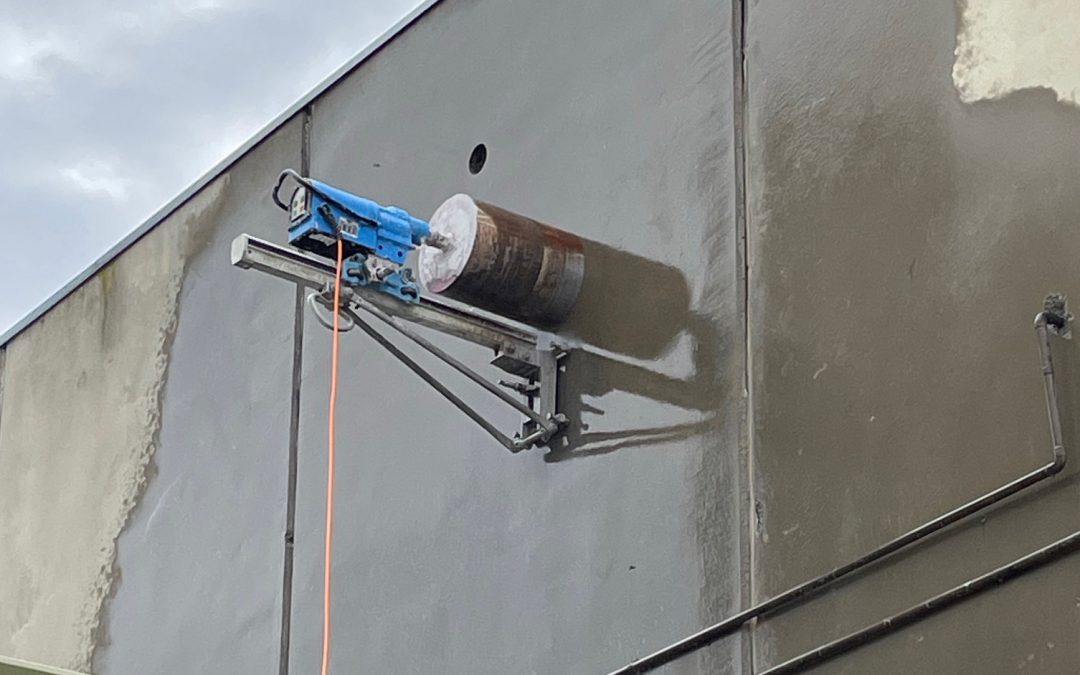
Equipment tells you plenty about a contractor. Professional core drilling can require diamond drilling systems, vacuum bases, suitable rigs and equipment matched to the diameter and depth of the opening. The right setup helps the operator maintain control and produce a cleaner, more accurate result.
I also pay attention to whether the contractor can explain why they need particular equipment for your project. If you ask about the drilling method and get a clear, practical answer rather than a cloud of technical jargon, that’s usually a good sign.
Does a Core Drilling Company Offer Concrete Scanning?
I also pay attention to scanning. Before drilling into a slab or wall, a professional Core Drilling Company should consider what might sit inside it, including reinforcing steel, conduits and pipes.
Pre-drilling scanning can help locate hidden services and reduce the risk of hitting something that definitely did not appreciate the renovation plans. It also gives the project team useful information before committing to the drilling location.
1. Look for Real Industry Experience
Not all concrete drilling jobs look the same.
A small penetration for plumbing might seem straightforward, while a large opening through a reinforced concrete slab can require careful planning, specialist equipment and more coordination. That’s why I always recommend looking beyond the number of years a contractor has been trading.
Ask about the types of projects they regularly handle.
A capable Core Drilling Company should understand applications such as:
- Plumbing and drainage penetrations
- Electrical and data penetrations
- HVAC and mechanical services
- Service risers
- Floor and wall penetrations
- Large-diameter core drilling
- Stitch drilling
- Commercial and industrial drilling
- Residential concrete drilling
The more relevant experience a contractor has, the easier it becomes to anticipate common site challenges.
Think of it like hiring a chef. You wouldn’t choose someone because they own a frying pan. You’d want to know whether they can actually cook the meal you ordered.
2. Check the Quality of Their Equipment
Concrete does not exactly volunteer to move out of the way.
A professional drilling team needs equipment that can handle the material, opening size and site conditions. Diamond core drilling equipment can deliver clean circular cuts when the operator selects the right setup for the job.
I’d ask what equipment the Core Drilling Company uses and whether it suits your project.
Depending on the job, the contractor may need:
- Diamond core drilling rigs
- Wet drilling equipment
- Vacuum drilling systems
- Suitable drill stands and bases
- Different diamond core sizes
- Equipment for deep drilling
- Specialist systems for restricted-access areas
Good equipment matters, but equipment alone does not guarantee a good result. An experienced operator needs to know how to use it properly.
3. Ask About Pre-Drilling Scanning
This is one of the questions I would never skip.
Concrete slabs and walls can hide a surprising amount of infrastructure. Reinforcement, electrical conduits, plumbing lines and other embedded services can sit beneath the surface.
That creates an obvious problem: you cannot always see what you are about to drill.
A professional Core Drilling Company should consider scanning before drilling where site conditions call for it. Scanning can help identify potential obstructions and allow the drilling position to be reviewed before work begins.
It also gives your project team better information.
If the planned opening clashes with a service or reinforcement, you can investigate alternatives before creating an expensive problem. A few minutes of planning can save hours of repairs.
4. Pay Attention to Safety Practices
I would never treat safety as an optional extra.
Concrete drilling can create dust, slurry, noise and debris, while some projects also involve working at height, confined areas, traffic zones or busy commercial sites.
That means your Core Drilling Company should have practical procedures for controlling site risks.
Look for a contractor who can clearly discuss:
- Site-specific hazards
- Dust control
- Wet drilling methods where appropriate
- Dust extraction
- Personal protective equipment
- Safe equipment operation
- Work area isolation
- Housekeeping and clean-up
- Safe access and positioning
A professional team should not become defensive when you ask safety questions. Clear answers usually indicate that the contractor has thought about the job before arriving.
5. Confirm Insurance and Documentation
Paperwork might not be the most exciting part of construction, but it matters.
Before hiring a Core Drilling Company, I recommend checking whether the contractor can provide appropriate insurance and relevant site documentation when required.
Depending on the project, this may include public liability insurance, workers compensation arrangements, Safe Work Method Statements and other documents requested by the principal contractor or site manager.
For commercial work, documentation can become particularly important because the drilling contractor often needs to fit into a larger construction safety system.
A professional company should understand that.
You should also make sure the business details on the quote match the contractor actually carrying out the work. It sounds obvious, but construction projects have a funny way of becoming complicated when responsibilities are unclear.
6. Look for Accurate, Clean Drilling
Precision matters.
If you need a hole for a pipe, conduit, cable or mechanical service, the opening needs to suit the application. An oversized, rough or poorly positioned hole can create unnecessary headaches for the next trade.
A reliable Core Drilling Company should understand the required diameter, depth and position before starting.
I’d confirm:
- Where the opening needs to go.
- The required diameter.
- The approximate drilling depth.
- Whether the concrete contains reinforcement.
- Whether scanning is required.
- How the contractor will manage slurry and debris.
- What clean-up the team will complete afterwards.
That final point often gets overlooked.
Professionalism does not end when the drill stops. A tidy work area makes life easier for everyone else on site.
7. Consider Their Range of Services
I like working with contractors who can handle more than one narrow type of drilling because construction rarely follows a perfectly scripted plan.
You might initially need several small penetrations, then discover that another section requires a larger opening or stitch drilling.
A versatile Core Drilling Company can potentially handle different drilling requirements without forcing you to coordinate multiple specialist contractors.
For Melbourne builders, plumbers, electricians, engineers and project managers, that can simplify communication and scheduling.
The key is relevance rather than quantity. You do not need a contractor who claims to do everything under the sun. You need one with the right capabilities for your particular job.
8. Read Reviews, But Look Beyond the Star Rating
Online reviews can help, but I wouldn’t choose a contractor based on stars alone.
Instead, read what customers actually say.
Look for comments about:
- Punctuality
- Communication
- Site cleanliness
- Accuracy
- Professional behaviour
- Ability to work around other trades
- Commercial project experience
- Problem-solving
I also like checking whether the contractor shows real examples of completed work. Project photos can give you a better feel for the type of drilling they handle.
A polished website is nice. Evidence of competent work is better.
9. Check How Clearly They Quote
A professional Core Drilling Company should make the scope reasonably clear before work begins.
You should know what the contractor has included and whether anything depends on site conditions.
A useful quote may identify the drilling locations, number of holes, approximate sizes, access requirements and any additional work that may affect the final scope.
If the quote simply says “concrete drilling” with little detail, I would ask questions before accepting it.
Clear communication at the beginning prevents awkward conversations later.
It also helps your builder, project manager or site supervisor coordinate the drilling with other trades.
10. Consider Their Response Time and Communication
Construction schedules move quickly.
A plumber might be waiting for a penetration. An electrician might need access before another trade arrives. A builder may have several subcontractors working around the same area.
That makes communication surprisingly important.
When I assess a Core Drilling Company, I look at how they communicate from the first enquiry. Do they ask useful questions? Do they understand the site? Do they respond clearly? Do they turn up when they say they will?
These details tell you plenty about how the actual job may run.
You don’t need constant phone calls. You need reliable communication at the moments that matter.
What Should You Ask Before Hiring a Core Drilling Company?
Before booking, I’d keep a short checklist handy:
| Question | Why It Matters |
| Have you completed similar drilling work? | Confirms relevant experience |
| Can you handle the required hole size and depth? | Checks equipment capability |
| Do you offer pre-drilling scanning? | Helps identify hidden services |
| What dust-control methods do you use? | Supports safer site conditions |
| Are you insured? | Helps protect the project |
| Can you provide required site documentation? | Supports commercial site requirements |
| How do you manage slurry and clean-up? | Keeps the work area organised |
| What access do you need? | Prevents site delays |
| Can you work around other trades? | Helps maintain the schedule |
| Is the quote clear about the scope? | Reduces misunderstandings |
It takes only a few minutes to ask these questions, but the answers can tell you a lot.
Why Local Melbourne Knowledge Helps
Melbourne construction projects come in all shapes and sizes, from residential renovations and apartment upgrades to commercial fit-outs, infrastructure work and large building projects.
A local Core Drilling Company can bring useful knowledge of Melbourne work environments, access challenges and project expectations.
That does not mean local automatically equals better. I would still check experience, equipment, safety practices and previous work.
However, familiarity with local sites can make communication and scheduling easier, particularly when the project involves multiple suburbs, tight access or a busy construction environment.
The Red Flags I Would Watch For
Sometimes the easiest way to choose a contractor is to notice what feels wrong.
I would be cautious if a contractor:
- Avoids questions about safety
- Cannot explain how they will approach the job
- Gives an extremely vague quote
- Shows little interest in site conditions
- Cannot discuss scanning where it may be relevant
- Has no clear process for clean-up
- Makes unrealistic promises about timing
- Provides poor communication before the job starts
Cheap does not always mean poor, and expensive does not automatically mean professional.
Instead, I look at the complete picture.
Final Thoughts
Choosing the right Core Drilling Company means looking beyond the hole itself. I want to know that the contractor understands the material, the equipment, the site, the safety requirements and the people working around them.
Experience, scanning, suitable diamond drilling equipment, clear quoting, good communication and responsible site practices all matter. When those pieces come together, you get more than a neatly drilled opening. You get a job that fits smoothly into the wider project.
If you’re planning concrete drilling in Melbourne, take a few minutes to discuss your requirements before work starts. Explain the location, diameter, depth, access conditions and project schedule, then ask the contractor how they plan to approach it.
Ready to discuss your drilling requirements? Get in touch with our team and start with a clear conversation about your project.
Frequently Asked Questions
What does a professional Core Drilling Company do?
A professional Core Drilling Company creates precise circular openings through concrete, masonry and other hard materials using specialist diamond drilling equipment. Contractors commonly provide penetrations for plumbing, electrical, HVAC, mechanical and construction applications.
Why is concrete scanning important before drilling?
Scanning can help identify reinforcement, pipes, conduits and other hidden items inside concrete. Finding potential obstructions before drilling allows the project team to review the drilling position and reduce the risk of damaging concealed services.
How do I choose a Core Drilling Company in Melbourne?
Start by checking relevant experience, equipment, insurance, safety practices, scanning capabilities, reviews and communication. I would also ask for a clear quote that explains the scope of work and any site requirements.
Can core drilling create silica dust?
Yes. Drilling concrete can generate respirable crystalline silica dust. Contractors should use appropriate control measures for the conditions and follow applicable workplace health and safety requirements.
What information should I give a drilling contractor?
Give the contractor the drilling location, required hole diameter, approximate depth, material type, access information and project timing. If you have plans or drawings showing the penetration locations, share those as well.
Is core drilling suitable for commercial construction projects?
Yes. Contractors use core drilling for many commercial applications, including service penetrations, electrical installations, plumbing, HVAC systems, fire services and larger construction openings. The contractor should match the equipment and drilling method to the project requirements.