
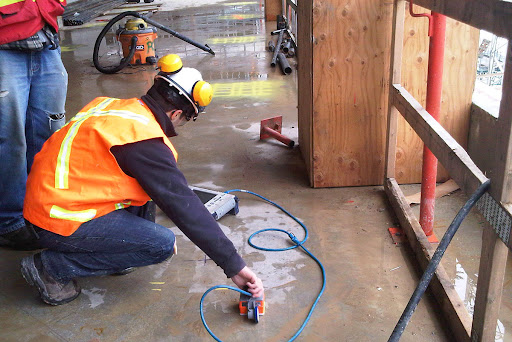
Concrete scanning – it might sound like a geeky detail, but trust me, you don’t want to skip this step. Imagine firing up a jackhammer on a brand-new job only to slice through a hidden cable or topple a wall. Not fun.
Concrete slabs hide all sorts of surprises: rebar, post-tension cables, electrical wires, water pipes, gas lines – you name it. Before you drill or core, it pays to know exactly what’s inside. In this article I’ll walk you through seven solid reasons why concrete scanning on your Melbourne construction or renovation site is a must.
Before you even think about drilling, getting an Expert Concrete Scanning Service in Melbourne gives you a clear, real-time view of what’s hiding beneath the surface. It takes the guesswork out of the job and helps you avoid costly surprises like hitting live cables, pipes, or structural elements. In a fast-moving Melbourne site, that kind of insight isn’t just helpful, it’s essential.
First off, what is concrete scanning? Think of it as a concrete “MRI” or “X-ray” (but way faster and safer). Using ground-penetrating radar (GPR) and other sensors, concrete scanners send radio waves into the slab.
These waves bounce back to the detector when they hit something different (steel, cable, void, etc.). The scanner then builds a map of what’s under the surface in real time. It’s a non-destructive, non-intrusive way to “see” the concrete’s insides without chipping anything out.
Ground-penetrating radar is the go-to tool; it can image up to several meters deep, giving clear 3D visuals of rebar mats, conduits, and anything else hidden underground or inside slabs.
What’s that mean for you? Well, you avoid blind drilling. And you find trouble before it finds you. Here’s why skipping that scan can be a nightmare.
1. Protect Your Crew from Hidden Dangers
Let’s be blunt: drilling into surprises is dangerous. If you drill through a live electrical conduit, someone could get electrocuted. Hit a high-voltage cable or gas pipe and you risk fire or explosion.
And don’t forget about those post-tension steel strands. Post-tension cables store immense energy – if you accidentally drill into one, it can whip or explode out of the slab like a giant metal snake. That’s a recipe for severe injury or worse.
Concrete scanning detects these hidden hazards before you start drilling. The scanners will show you exactly where live wires, metal pipes or tension cables are. This isn’t guesswork; it’s clear evidence on a screen.
You can mark those spots, drill elsewhere, or take extra precautions. Basically, you’re turning a deadly guessing game into a safe, planned job. In short, scanning = safety. Without it, drilling blind could send sparks flying – and not the good kind.
- Why risk it? Scanning spots electrical cables and gas lines in advance.
- Live wires? Done deal – mark ’em out.
- Post-tension cables? You’ll know exactly where they lie (avoiding a potential catastrophe).
- Voids or weak spots? They show up on the scan too, so you won’t fall through an unexpected hole.
Imagine a magnet tipped with danger underneath your slab. Concrete scanning is like checking that magnet with a detector, so you’re not walking into it unawares. We once had a project in Melbourne where a slab scan revealed a criss-cross of steel beams and pipes we never expected; drilling blindly would have hit something important. With scanning, our crew avoided all those cables and stayed safe.
2. Preserve Structural Integrity (No Surprise Damage)
Concrete structures rely on hidden reinforcements to hold things up – primarily rebar (steel bars) and tensioned cables. These aren’t optional; they’re vital. If you accidentally slice through them, the slab can lose strength and even crack or collapse later on.
Think about it: rebar holds concrete together, and post-tension strands keep floors rigid. If drilled wrongly, you weaken the foundation of the building. Concrete scanning protects the slab’s inner skeleton. The scan will highlight exactly where every piece of reinforcement lies.
Then your drill holes can be made in safe spots clear of anything critical. You’ll avoid chopping through that rebar mesh or those tensioned cables. In practical terms, that means no surprise cracks, no sinking slabs, and no angry phone calls from engineers or building inspectors.
A cracked or collapsing slab isn’t just ugly – it’s illegal. Melbourne’s building codes demand a safe structure, and ruining rebar could violate those codes. By scanning, you show that you’re respecting the design and following proper safety practice. You keep walls upright and beams sound.
In short, scanning = structural peace of mind. Skipping it is like driving with your eyes closed. Not advisable if you want to stay out of trouble (or lawsuits!).
3. Avoid Massive Repair Bills and Delays
Picture this: you break a pipe or conduit while drilling. Now the site is flooded or has no power, and work grinds to a halt. Fixing that mistake could cost tens of thousands – plumbers, electricians, and concrete patch crews all have to swoop in. Not to mention the downtime while everything is fixed. Every day of waiting costs you money in labour and liquidated damages.
Concrete scanning is cheaper insurance than a repair. It saves money in three big ways:
- No Surprise Fixes: By knowing where all pipes and cables are, you avoid hitting them. That means no expensive plumbing or electrical repairs mid-job.
- No Down Time: A scan keeps your schedule intact. When you drill with confidence, you don’t have to stop the job to call in specialists or redesign the work.
- No Penalties: Delays can trigger contract fines (liquidated damages) or extra overhead. Staying on schedule means no penalties.
For example, scanning lets you plan every hole so there are no costly “oops” moments. If your scanner flags a thick cluster of pipes behind a concrete wall, you can reroute your project plan instead of scrambling for a fix.
Even common sense creeps in: drilling blindly might save a little time at first, but as soon as something goes wrong, that “shortcut” bites back with compound interest. Trust me, the upfront cost of a scan is peanuts compared to an emergency repair bill.
4. Stay Efficient and Keep Your Project on Track
Speaking of saving time, think of concrete scanning as an investment in efficiency. It might feel like an extra step, but in practice it speeds everything up. How? Because it turns your crew’s day from frenzied guesswork into a smooth operation.
Without scanning, the fastest job can become the slowest nightmare. Every unexpected hit – a water line, a critical rebar – forces an unscheduled pause: stop work, figure out the issue, fix it or redo the plans, then resume. That can eat hours or days.
With scanning, you do a 10-minute scan and instantly have a map of hazards. Now every hole is drilled right the first time. Your team knows exactly where to drill and where to avoid. That confidence keeps the whole job on schedule.
In tight project schedules, scanning is like checking your GPS before a drive – it helps you avoid traffic jams (in this case, “traffic” of pipes and rebar) and get to your destination fast.
Most concrete scanning results are ready same-day: as soon as you lift the scanner, you’ve got marks on the slab telling your crew where it’s safe to dig. It keeps things flowing, deadlines met, and the client happy.
Remember, on a construction site time is money. Every hour lost is an hour you’re paying bills for. A thorough scan can pay back in speed (and fewer headaches) on day one.
5. Comply with Safety Regulations (Cover Your Arse)
Down under, the laws are pretty clear: you must identify hazards before you dig. While there isn’t a law that explicitly says “you must do concrete GPR scanning,” building and safety regulations broadly require that you manage risks in high-risk work (and blind drilling is definitely high-risk).
In Australia, safety isn’t something you wing — you plan for it. When I’m working on-site, I always make sure risks get identified before any drilling starts. That’s exactly what regulators expect too. According to official guidance from WorkSafe, you should always locate and manage hidden hazards before starting high-risk construction tasks. You can check their recommendations here. Using Concrete Scanning helps you stay compliant, avoid legal trouble, and keep your site running smoothly without unwanted surprises.
WorkSafe and Safe Work Australia expect that you take all practical steps to find what’s hidden before drilling.
WorkSafe Victoria’s guide to working near underground services recommends thorough locating of cables and pipes. (In other words, don’t just guess where they are.) By scanning, you’re following that advice.
If anything goes wrong on site, having documented scan results can show regulators that you used “best practice.” It’s the difference between saying “oops” and saying “we took every precaution.”
For big projects, contracts often mandate concrete scanning or service locating in the pre-work planning. Even if not written, inspectors and clients will expect it as a safety measure. By scanning, you’ll tick that “safe work practice” box.
The bottom line: skipping scanning can paint you into a corner if something breaks or if an inspector asks, “What steps did you take to prevent hits?” With a GPR scan, you have a neat answer and a clean conscience. Without one, you’re exposing yourself to fines, liability, or worse. It’s simply good risk management.
6. Achieve Pinpoint Accuracy in Your Work
Concrete scanning isn’t just about avoiding disasters; it’s also about precision. When you know exactly where everything is, you can work with confidence. This accuracy means cleaner jobs: holes drilled in the right spots, no messy re-drills, and perfect alignment. Your work looks professional and precise (no “scrap drill” patches where a pipe was just missed by a hair).
Think about it: in a building with densely packed utilities, guessing can put you nowhere near the right place. But with a scan, you see the whole picture. You’ll know the safest angle and depth for each hole. This is especially valuable for technical jobs like installing anchors, wires or pipes in existing structures.
Accurate scanning data helps engineers too. If a scan shows an unexpected cluster of cables, the structural engineer can adjust their plans before concrete drilling even begins. Everyone’s on the same page.
All this means better quality outcomes. You avoid the “I didn’t know it was there” excuses and rework. Instead you deliver an installation that fits perfectly the first time. Clients notice this kind of care, and it builds trust.
Table: Common Hidden Objects vs. Risks vs. How Scanning Helps
| Hidden Object | Risk if Hit | How Scanning Helps |
|---|---|---|
| Rebar (steel rods) | Structural weakening, cracks | Maps rebar placement so you avoid it |
| Post-tension cables | Violent blowout, slab collapse | Marks exact cable locations |
| Electrical conduits | Electrocution, power outage | Shows live cable positions |
| Water/gas pipes | Flooding, explosion, fire | Identifies plumbing and gas lines |
| Empty Voids | Sudden collapse, uneven slab | Detects cavities and honeycombing |
| Communication cables | Service disruption, data loss | Locates phone/Internet lines |
| Foreign objects (trash, rocks) | Bolt damage, jams, unexpected obstructions | Finds miscellaneous debris |
7. Sleep Easy – Peace of Mind
Last (but certainly not least), scanning buys you peace of mind. In construction, anxiety doesn’t build confidence. Scanning removes the nagging worry that you might hit something disastrous. You’ll feel like you’ve rolled back on a protective safety net.
Instead of starting work and crossing your fingers, you’ll start work knowing you have all the info. It’s a night-and-day difference. Your team will thank you (and so will your boss or client). You’ll be avoiding surprise injuries, cost blowouts, or angry neighbors (imagine accidentally knocking out the whole building’s power!).
As an Aussie builder once said, “It’s better to measure twice and drill once.” Here we’re measuring through that concrete first. The slight effort of scanning upfront keeps your site drama-free. When push comes to shove, reliability matters.
And don’t forget insurance: if something bad did happen, showing you did a proper scan can protect you from liability. It shows you didn’t skip steps.
At the end of the day, concrete scanning is about being smart, not paranoid. It’s an easy step that turns the unknown into the known. Why gamble with safety, schedule, or your bottom line?
Conclusion
Look, I get it – scanning might feel like one more thing on the checklist. But it’s a shortcut that literally saves lives, money and headaches. In a bustling Melbourne construction scene, you can’t afford the risk of hidden hazards. By making concrete scanning a standard part of your on-site prep, you’re working smarter and safer.
To sum up, concrete scanning protects people, structures and your bottom line. It’s about confidence. And remember, Australia’s safety rules expect this kind of precaution. Don’t gamble with what you can’t see. Instead, plan ahead: get a thorough scan, mark out those hidden lines, and drill with confidence.
If you’re about to start demolition or coring, make a call. Contact a professional scanning team to survey your site before you swing the hammer. In Melbourne, there are experienced crews ready to help – they’re like your concrete hazard detectives. It might just be the easiest insurance policy you can buy for your project.
Get ahead of the game: don’t skip the scan, and stay safe on site!
Frequently Asked Questions (FAQs)
Q: What exactly is concrete scanning and how does it work?
A: Concrete scanning is a non-destructive method (usually using GPR) to detect objects inside concrete. It sends radar waves into the surface and creates visual maps of hidden elements like rebar, cables, and pipes.
Q: What kind of hidden hazards can concrete scanning detect?
A: It can detect rebar, post-tension cables, electrical conduits, plumbing, and voids. Essentially, anything embedded in concrete that differs in density can be identified.
Q: Is concrete scanning safe for workers and the environment?
A: Yes, it’s completely safe and non-invasive. GPR uses low-power radar waves with no radiation, making it harmless for workers, nearby people, and the environment.
Q: Is concrete scanning mandatory for Melbourne projects?
A: While not always legally required by name, it’s often expected under safety regulations. It helps identify risks before drilling, ensuring compliance and due diligence.
Q: How much does concrete scanning cost, and is it worth it?
A: Costs vary but are usually a small investment compared to potential repair costs. It’s highly cost-effective as it prevents damage, delays, and safety risks.
Q: How deep can scanners see, and do I need different scans for floors vs. walls?
A: Most scanners can detect up to 500mm–1000mm or more depending on conditions. Different surfaces like walls or ceilings may require adjusted scanning techniques.
Q: Where can I get concrete scanning services in Melbourne?
A: Many specialist companies offer scanning services across Melbourne. They can quickly assess sites and provide same-day results for construction or renovation projects.
Q: Can I skip scanning if I’m careful or experienced?
A: No, skipping scanning is risky even with experience. Hidden elements may not match plans, and scanning ensures safety, accuracy, and avoids costly mistakes.