
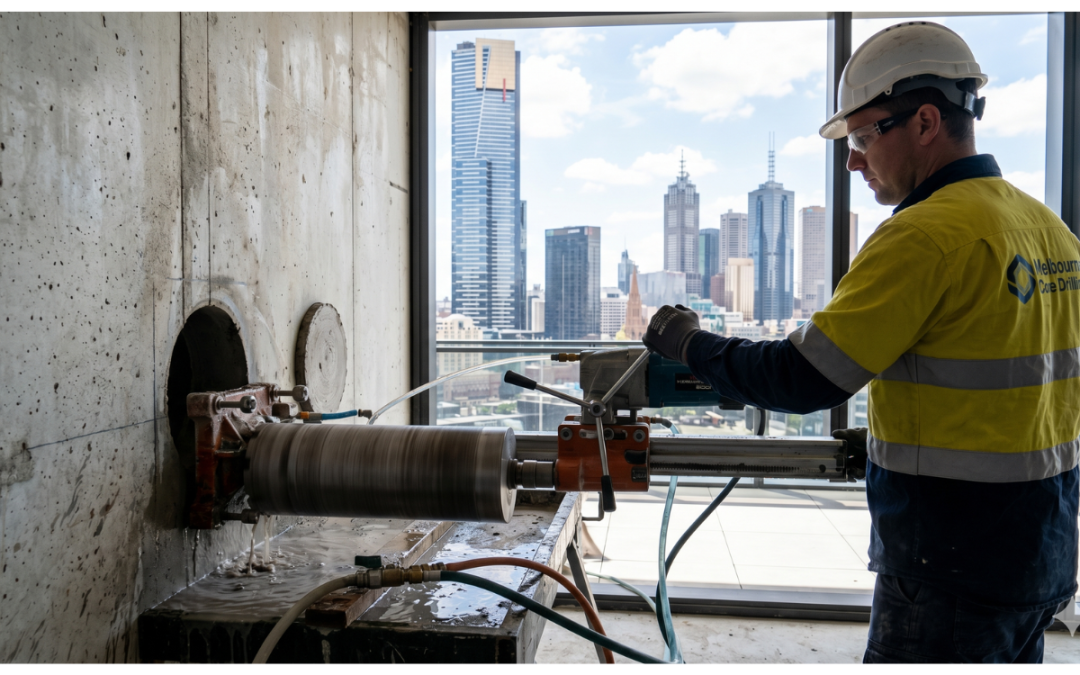
Imagine this: you’ve just installed a shiny new air conditioning unit in your Melbourne office, and now you need HVAC core drilling to create a precise hole through a concrete wall for the ductwork.
You could start swinging a jackhammer but that’s like tearing down a house to hang a picture. Instead, we use HVAC core drilling a super-precise, low-mess way to drill holes exactly where your HVAC pipes and wires need to go.
In fact, core drilling is the secret hero behind comfy indoor climates in modern Aussie buildings, and today I’m here to walk you through seven unbeatable reasons why it’s a game-changer.
Fig: Melbourne’s sparkling skyline and high-rises behind each comfy office or apartment is a smart HVAC system, with holes drilled by core drills, not chaos. In cities like Melbourne, innovation is in the air (pun intended).
Whether it’s a sleek CBD skyscraper, a hip inner-city apartment or a heritage-renovation, we all love reliable heating and cooling. But hidden behind those carpets and ceilings is a labyrinth of ducts and pipes.
Creating space for them used to mean jackhammers, downtime and dust. Core drilling changes the game: it drills round, precise holes for HVAC lines without tearing up the place.
That’s why, for top-notch indoor climate work, you want an Expert HVAC Core Drilling Service in Melbourne crews who know exactly where to bore and how, so your new duct or refrigerant line slides through as easy as a key in a lock.
We’ve seen it all: adding ducts to heritage sites without a crack in sight, squeezing new outlets into brand-new builds, or sneaking a pipe under a footy field without anyone noticing. Core drilling is the quiet specialist that other drilling methods can’t touch.
1. Surgeon‑Level Precision (Keeps Structures Intact)
Think of core drilling like surgery for your building: extremely precise and minimally invasive. These drills use diamond‑tipped cylindrical bits to drill perfectly round holes through concrete, brick, or stone. The result? No more jagged cracks radiating out from where you drilled.
- Clean, precise holes: Core drills bore exactly the size you specify. That means your HVAC duct or pipe fits snugly, without the drywall chipping away or gaps to patch up.
- No hidden damage: Unlike a jackhammer blow, there’s almost zero vibration. We literally “nibble” through the material, preserving the surrounding structure and rebar. In Aussie terms, it’s like using tweezers instead of a trowel to remove a splinter.
- Maintains integrity: Your building won’t “feel” the hole. Engineers often compare a core-drilled hole to notches made by an expert carpenter neat and planned, with structure and strength left untouched.
I remember a job in an old Melbourne theatre: folks expected dust and cracks, but the core drill made holes so clean you could hardly tell we were there (except for the perfectly aligned vent!). When precision matters and in modern HVAC systems, core drilling is unbeatable.
2. Minimal Mess and Disruption
Core drilling is so controlled that cleanup is almost a joke. Traditional drilling whips up dust clouds and scatters debris; core drilling contains it.
- Wet drilling controls dust: We usually spray water at the drill bit, which cools the bit and captures airborne particles. No giant dust cloud drifting down the corridor. (Moist drilling is basically mandatory here – imagine a zippy little vacuum cleaner eating the dust as it’s made.)
- Less noise: The drilling noise is more of a hum or whistle, not a jackhammer roar. It won’t set off the building alarm or startle the office goldfish. (If your neighbours hear you drilling, you haven’t drilled right.)
- Smart cleaning: When the hole is done, we suck out slurry and water. The hole is clean and ready to use. Compare that to hacking a big messy opening – you’ll save hours of chipping away rubble.
A quick way to see the difference is a comparison:
| Aspect | Core Drilling | Traditional Drilling |
|---|---|---|
| Noise & Vibration | Low (especially with water) | Loud jackhammer-level noise |
| Dust & Debris | Very low (wet drilling suppresses dust) | High (dry drilling spews dust) |
| Hole Precision | Very high – smooth round holes | Low – rough, irregular holes |
| Cleanup & Time | Fast – minimal cleanup needed | Slow – lots of breaking waste |
Even the table shows it: core drilling makes any HVAC install way tidier. Short on cleanup means your team can get back to work (or beers) sooner.
3. Suits Any Material & Any Angle
Metal, brick, stone, concrete – name a hard material, and core drilling tackles it. Even better, core drills come in all shapes and sizes:
- Variety of bits: Need a tiny hole for a thermostat wire? Or a metre-wide passage for ducting? There’s a bit for that. We click on the right diamond core bit and go.
- Any surface, any orientation: Floor, wall, ceiling – core drills handle them. Some rigs even tilt or suspend from scaffolds. It’s like having a “drilling gymnast” for awkward spots. We’ve angled bits through concrete ramps and up through basements with no fuss.
- Portable or rig-mounted: Smaller jobs can use a handheld rig, while huge holes use a floor-stand or truck-mount. If you’ve got a concrete BBQ pit and you need a pipe, we’ll wheel in the right rig.
This flexibility matters in Melbourne’s diverse construction scene. Renovating an art deco flat? We’ll carefully core through the quarry tile. Expanding a tech startup’s loft office? The concrete slab’s no problem. For modern buildings that mix old and new, that versatility means less compromise.
4. Faster Installs & Lower Costs
Time is money – especially on a fast-moving build site. Core drilling shaves hours off many HVAC projects:
- Quick hole-making: Drill operators can create holes in minutes (literally). A 200mm vent hole in a concrete slab? Often done in under 5 minutes once set up. With a hammer drill, it’s an all-day fight (and probably multiple bits broken).
- Less fix-up work: Because the holes are clean and precisely where you need them, there’s little patching or adjusting later. No need to plaster over extra cracks or widen a hole that was too small. That means labor hours saved.
- Mobile rigs, ready to go: Skilled teams can relocate rigs fast. In the time it takes a tradie to grab another tool, core drillers can be finishing up a hole and moving on.
Upfront equipment rental cost might look higher, but it’s a bargain long-term. With core drilling, one person can do what once took a crew of jack hammerers. Fewer work hours, fewer contractors, and a faster path from planning to “systems up and running.” Especially when your fit-out deadline looms, every minute saved on drilling is gold.
5. Healthier, Safer Worksite
Core drilling isn’t just good for the building – it’s safer for everyone on site:
- Less silica dust: As noted, we use water feed or vacuum systems to trap dust. Silica inhalation from concrete is no joke (lungs hate it), so we follow the rules to the letter. This really matters for your team’s health (and your workers’ comp premiums). WorkSafe Victoria strongly recommends dust suppression methods like wet drilling to reduce silica exposure. You can also review their official guidance
- Stable drilling stands: Core drills often bolt or vacuum to the surface, so they don’t dance around. Less chance of slipping or wandering than a freestanding drill.
- Trained operators: It’s not a weekend DIY gadget. Operators are trained to spot hidden pipes or rebar, move the rig safely, and wear all the PPE. You won’t have random fragments shooting off like a rogue goat when these pros drill.
So you avoid nasty surprises (accidentally nicking a gas pipe is literally explosive) and you keep the site calm. Everyone goes home to their fam at the end of the day – no blasted eardrums or dust masks needed if the method is done right.
6. Whisper-Quiet Operation
Shhh… do you hear that? Exactly. Well‑executed core drilling is much quieter than older methods:
- Quieter for occupants: In occupied buildings (think schools, offices, even live-in homes), blasting 110dB jackhammer noise through thick walls is out of the question. Core drills are gentler; water also silences the bit on contact. The difference is night and day, literally a whisper rather than a roar.
- Happy neighbours: In dense Melbourne suburbs, noise complaints can stop a job fast. Core drilling lets you be respectful. You can run an early-morning drill session without waking up the street. (Bonus: fewer complaints means happier relationships with neighbours and councils.)
- Worker comfort: Your tradies will appreciate not having to shout over the noise. Communication is easy, and hearing protection can even be more lightweight.
Less noise means more comfort. It’s a practical perk: imagine getting your new HVAC without feeling like you’re in a rock concert mosh pit. One client told me their staff barely noticed the drill – then looked up amazed to see the hole already done. No one likes a dusty, noisy pandemic of drilling when we have gentler options.
7. Future-Proof & Eco-Friendly
Finally, core drilling lines up with today’s building smarts and sustainability:
- Minimal energy waste: All that precision means we don’t over-work the structure. There are no extra supports or patches (fewer materials used on corrections). This small efficiency adds up across a project.
- Less waste: Only a small cylinder of concrete gets removed – instead of heaps of broken rubble. The removed core can even be kept for analysis or recycled. It’s aligned with green building practices, minimizing the landfill footprint of your install.
- Prepared for tech: Modern HVAC tech (like heat-recovery systems or chilled beams) often needs exact placements. Core drilling fits well with these systems, making it easier to upgrade or retrofit in the future. That means your building stays adaptable for new needs (and better property value).
In short, core drilling is the “future-forward” way to upgrade building services. It shows you’re investing in a method that keeps your building safe, flexible and green. And with Melbourne’s strong push for efficient, low-emissions buildings, every bit of dust we avoid is a win for compliance and comfort.
Conclusion
There you have it: seven rock-solid benefits that make HVAC core drilling a no-brainer for modern construction. From surgeon-like precision to a quieter worksite (your ears will thank you), this method shines in versatility, safety, speed and sustainability. In Melbourne’s fast-paced building scene, core drilling keeps things neat and efficient – it’s how we keep buildings from breaking sweat (or cables) over HVAC upgrades.
Ready to give your building the best care? Don’t sweat it! If you’re planning new HVAC ductwork or retrofits, reach out today. Let’s drill your next hole with style and smarts. With the right team at your side, you’ll have perfect climate control without the mess and stress.
Feel free to drop a comment or contact us for a quote – staying comfortable has never been easier!
Upgrade your building’s air systems hassle-free! Get expert advice or a free quote on HVAC core drilling – [talk to us today] or schedule your project now.
Frequently Asked Questions
Q: What exactly is HVAC core drilling?
A: Core drilling uses a diamond-tipped drill to drill clean, round holes in concrete, brick, or stone. For HVAC, it creates precise openings for ducts, pipes, and cables. It’s accurate and non-destructive—more like a surgeon’s tool than a sledgehammer.
Q: Why use core drilling for HVAC instead of other methods?
A: Core drilling avoids damage, vibration, and messy results from traditional methods. It keeps the structure intact while delivering clean, accurate holes. It’s faster, quieter, and reduces dust, making installations safer and more efficient.
Q: Is core drilling safe for older or delicate buildings?
A: Yes, when done professionally, it’s ideal for delicate or heritage structures. Careful scanning and planning prevent damage to hidden elements. The controlled process ensures minimal impact on surrounding materials.
Q: How big of a hole can you drill?
A: Core drills range from small 20–25mm holes to over 1000mm for large applications. Depth depends on the equipment used, with standard rigs handling over a meter. The right tool is chosen based on your project needs.
Q: Will core drilling disrupt my business or home for days?
A: Not at all. Most holes are completed within minutes once set up. The process is quiet and low-dust, so work can often be done with minimal disruption to daily activities.
Q: Any special prep needed before core drilling?
A: Basic safety checks are done, like locating pipes and cables and marking drill points. Access to water and power is arranged, and minimal protection is used for cleanliness. Prep is quick and straightforward.
Q: What about the cost?
A: Core drilling may seem costly upfront but saves money by reducing repairs and cleanup. Its speed and precision lower overall labor costs. It’s generally cost-effective for most HVAC projects.
Q: Can I DIY core drill?
A: It’s not recommended for most people. Core drilling equipment is heavy and requires proper setup and skill. Hiring professionals ensures safety, accuracy, and better long-term results.