
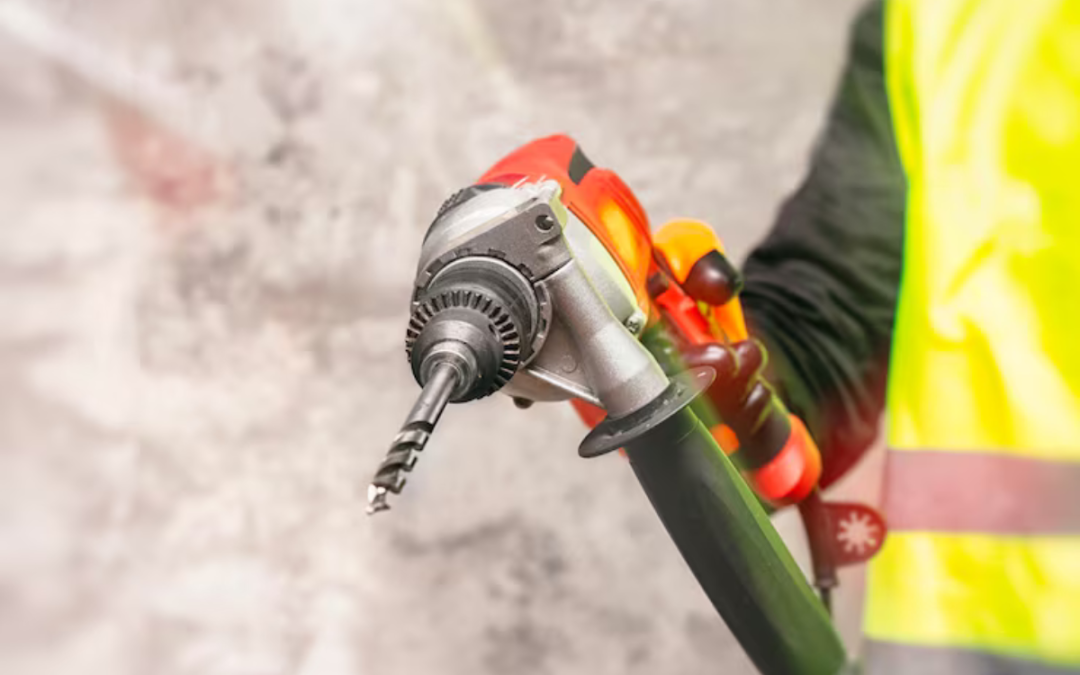
Choosing the right drilling equipment can make a big difference when you need clean, accurate holes in concrete. An electric core drill and a hydraulic core drill can both deliver impressive results, but they suit different working conditions, project sizes and site requirements.
So, which one should you choose? I’d say it depends less on which machine looks more powerful and more on what your concrete drilling job actually demands. Let’s compare both options and make the decision a little easier.
If you’re planning professional concrete drilling in Melbourne and want to understand where an electric core drill fits into the job, it helps to first understand how electric and hydraulic systems differ.
What Is an Electric Core Drill?
An electric core drill uses an electric motor to rotate a diamond core bit through concrete, masonry or other hard materials. the rotating bit removes a circular section from the material, creating a precise opening without relying on heavy impact.
I find electric systems particularly useful when a project needs accuracy, portability and practical setup. Depending on the equipment, operators can use them for smaller to medium-sized holes and a range of indoor or outdoor concrete drilling applications.
Electric core drilling can suit work such as:
- Plumbing penetrations
- Electrical and data cabling openings
- HVAC penetrations
- Floor box installations
- Wall penetrations
- Small-to-medium concrete coring jobs
- Commercial fit-outs
- General construction work
One major advantage comes down to convenience. You can generally connect an electric drilling system to a suitable power supply without needing the additional hydraulic power unit, hoses and setup associated with hydraulic equipment.
What Is a Hydraulic Core Drill?
A hydraulic core drill uses pressurised hydraulic fluid to power the drilling motor. Instead of drawing its operating power directly from an electrical motor, the drilling head connects to a hydraulic power source.
This setup gives hydraulic equipment a different set of strengths. It can handle demanding drilling conditions and is particularly useful where operators need substantial power, controlled performance or equipment suitable for specialised environments.
Hydraulic core drilling can work well for:
- Large-diameter concrete holes
- Heavy-duty commercial drilling
- Deep concrete drilling
- Large infrastructure projects
- Demanding construction sites
- Areas where electrical equipment may create additional concerns
Hydraulic systems can also offer excellent torque and controlled drilling performance. In other words, when the concrete starts looking less like a wall and more like a small fortress, hydraulic equipment can earn its keep.
Electric Core Drill vs Hydraulic Core Drill: Key Differences
Now we get to the part that matters most.
Both systems can drill concrete effectively, but they differ in power source, setup, portability and suitability for different applications.
| Feature | Electric Core Drill | Hydraulic Core Drill |
| Power source | Electricity | Hydraulic power |
| Setup | Generally simpler | More involved |
| Portability | Usually easier to move | Often requires additional equipment |
| Best suited to | Small to medium jobs and general applications | Heavy-duty and demanding applications |
| Large-diameter drilling | Depends on equipment | Generally well suited |
| Indoor applications | Often convenient | Depends on hydraulic setup |
| Equipment requirements | Power supply and drilling equipment | Hydraulic power unit, hoses and drilling head |
| Operator control | Precise and practical | Strong torque and controlled performance |
| Maintenance | Generally straightforward | Requires hydraulic system maintenance |
| Project suitability | General construction and fit-outs | Heavy commercial and specialised projects |
The table gives you the quick answer, but the real choice depends on the project.
1. Power and Performance
When people compare an electric core drill with hydraulic equipment, power usually becomes the first talking point.
Hydraulic systems can provide high torque and perform strongly during demanding drilling operations. This makes them useful when the project involves larger holes, deeper drilling or tough concrete conditions.
An electric core drill, however, can provide more than enough performance for many everyday construction applications. For plumbing, electrical, HVAC, data cabling and general penetration work, you may not need the extra complexity of a hydraulic setup.
The smartest choice isn’t always the most powerful machine. It’s the machine that provides enough performance for the job without creating unnecessary complexity.
2. Portability and Site Access
Melbourne construction sites don’t always offer generous working space. You might be working inside a commercial building, around existing services or in a tight plant room where every centimetre matters.
Electric equipment can often make setup easier because you don’t need to position a separate hydraulic power unit and manage hydraulic hoses around the work area.
That can make an electric core drill a practical option for:
- Indoor drilling
- Renovation projects
- Commercial fit-outs
- Tight-access areas
- Smaller construction sites
- Maintenance work
Hydraulic systems can still work extremely well in restricted environments, but the overall setup may require more planning.
3. Hole Size and Drilling Depth
The required hole size can completely change your equipment decision.
For smaller and medium-sized penetrations, an electric system can often provide the performance you need. However, as the diameter and drilling depth increase, the demands on the equipment also increase.
Hydraulic core drilling can become more attractive for heavy-duty applications where operators need strong torque and consistent performance.
Before selecting equipment, I would consider:
- What diameter hole do you need?
- How deep do you need to drill?
- What type of concrete are you drilling?
- Is reinforcement present?
- How many holes need to be completed?
- What access does the site provide?
These questions can tell you much more than simply asking, “Which machine is stronger?”
4. Setup Time and Practicality
Time matters on construction sites.
Every extra piece of equipment that needs positioning, connecting and checking can add to the setup process. An electric core drill can offer a relatively straightforward arrangement where a suitable power source is available.
Hydraulic drilling involves the drilling head plus the hydraulic power system and associated connections. That doesn’t automatically make it the wrong choice. It simply means the project needs to justify the additional setup.
For a straightforward commercial penetration, simpler equipment may make more sense. For a demanding structural drilling project, the additional setup may be completely worthwhile.
5. Safety Considerations When Drilling Concrete
Concrete drilling isn’t something you should approach casually. The machine is only one part of the safety equation.
Before drilling, you should understand what’s inside the concrete. Reinforcing steel, electrical cables, plumbing lines and other embedded services can create serious problems if you drill without proper planning.
Concrete scanning can help identify potential hazards before drilling begins.
Dust control also matters. Drilling concrete can generate respirable crystalline silica dust, which creates a serious workplace health risk. Safe Work Australia identifies drilling and other processes involving concrete and silica-containing materials as activities that can generate respirable crystalline silica, so appropriate risk controls should form part of your work planning. Safe Work Australia – Silica safety guidance.
For professional work, I would also consider:
- Appropriate water suppression where suitable
- Dust extraction
- Suitable respiratory protection
- Secure equipment positioning
- Correct drilling technique
- Checking for embedded services
- Following the relevant site WHS requirements
The goal isn’t simply to make a hole. The goal is to make the right hole without creating a bigger problem.
6. Electric vs Hydraulic Core Drilling for Melbourne Projects
Melbourne has a broad mix of construction, commercial refurbishment, infrastructure and property maintenance work. That means there isn’t one universal drilling solution.
An electric system may make sense when you need practical equipment for general concrete drilling, service penetrations or commercial fit-outs.
Hydraulic equipment may become the better choice when you’re dealing with larger-scale drilling, heavy-duty applications or conditions that demand greater torque and specialised equipment.
For example, imagine you’re installing services inside an existing commercial building. You need several accurate penetrations through concrete walls and floors, but the work area is relatively confined.
In that situation, an electric system may offer the practical balance of portability, accuracy and performance.
Now imagine a large construction project requiring repeated, large-diameter holes through substantial concrete sections.
That’s where hydraulic equipment may have a stronger case.
When Should You Choose an Electric Core Drill?
I’d consider an electric core drill when your project prioritises convenience, accuracy and straightforward setup.
It can be a suitable option for:
- Plumbing penetrations
- Electrical work
- Data cabling
- HVAC services
- Floor box installations
- Wall penetrations
- Commercial renovations
- General concrete coring
It can also make sense when your site has reliable electrical access and the required drilling diameter falls within the equipment’s capabilities.
The key point is simple: don’t choose electric just because it’s convenient. Choose it because its capabilities match the actual job.
When Should You Choose a Hydraulic Core Drill?
Hydraulic equipment deserves serious consideration when the job demands heavy-duty performance.
It may be more appropriate for:
- Large-diameter core drilling
- Deep drilling applications
- Heavy commercial projects
- Infrastructure work
- Challenging concrete conditions
- Projects requiring high torque
- Specialised drilling environments
Hydraulic systems can deliver excellent performance, but they generally require more supporting equipment and planning.
If you’re unsure, a professional drilling contractor can assess the site and recommend the right equipment rather than forcing every job into the same solution.
Electric Core Drill vs Hydraulic Core Drill: Which One Wins?
If you want the short answer, neither machine wins every time.
An electric core drill often wins on simplicity, portability and practicality for many general concrete drilling applications.
A hydraulic core drill can win when the project demands high torque, heavy-duty performance and larger-scale drilling capability.
Think of it like choosing between a well-equipped ute and a heavy-duty work truck. You don’t automatically need the bigger machine because it can carry more. You need the machine that matches the load.
| Your Project Requirement | Better Option |
| General concrete drilling | Electric |
| Smaller to medium penetrations | Electric |
| Commercial fit-outs | Electric |
| Plumbing and electrical penetrations | Electric |
| Tight-access work | Often electric |
| Large-diameter drilling | Hydraulic may be preferable |
| Deep heavy-duty drilling | Hydraulic may be preferable |
| High-torque applications | Hydraulic |
| Large infrastructure projects | Hydraulic may be preferable |
Why Professional Concrete Drilling Still Matters
Choosing the right machine is only half the job.
A quality core drilling result also depends on accurate positioning, appropriate diamond tooling, drilling technique, concrete assessment and safe work practices.
A professional operator can assess the concrete, understand the required penetration and select equipment based on the actual conditions rather than simply choosing whatever machine happens to be available.
This matters particularly when you’re drilling around structural elements or existing building services.
A clean hole in the wrong location isn’t a successful drilling job. It’s an expensive conversation waiting to happen.
Factors to Consider Before Choosing Your Core Drill
Before starting a concrete drilling project in Melbourne, I recommend looking at these factors:
Hole diameter: Larger holes can require more powerful equipment.
Drilling depth: Deep penetrations can place greater demands on the drilling system.
Concrete condition: Older, reinforced or particularly dense concrete may require specialised equipment.
Access: Tight spaces can influence equipment selection and setup.
Number of holes: A small one-off penetration has different requirements from hundreds of repeated holes.
Embedded services: Always consider electrical, plumbing and structural elements before drilling.
Power availability: Your available power source can influence whether an electric system is practical.
Site conditions: Noise, water management, dust control and surrounding operations can affect your approach.
Final Verdict
So, which is better for concrete?
For many everyday applications, an electric core drill offers an excellent balance of performance, portability and practical setup. It can suit plumbing, electrical, HVAC, data cabling, floor box and general concrete penetration work.
A hydraulic core drill can make more sense when you move into larger, deeper or more demanding drilling applications where high torque and heavy-duty performance become priorities.
Ultimately, I wouldn’t choose based on the machine alone. I’d look at the hole size, drilling depth, concrete condition, access, site environment and project requirements first.
If you’re planning concrete drilling in Melbourne and you’re unsure which equipment or drilling method suits your project, don’t leave it to guesswork. Get in touch with our team to discuss your requirements and find a practical approach for your site.
Frequently Asked Questions
Is an electric core drill good for concrete?
Yes. An electric core drill can work very effectively for many concrete drilling applications, particularly small to medium-sized penetrations. The right equipment depends on the required hole diameter, drilling depth, concrete condition and project requirements.
Is hydraulic core drilling better than electric core drilling?
Not necessarily. Hydraulic core drilling can provide strong torque and suit demanding applications, while electric systems can offer easier setup and portability. The better option depends on the specific drilling project.
What is an electric core drill used for?
An electric core drill can create accurate circular openings in concrete for plumbing, electrical, HVAC, data cabling, floor boxes and other building services.
When should I use a hydraulic core drill?
You may consider hydraulic equipment for larger-diameter, deeper or heavy-duty drilling applications where higher torque and specialised performance are required.
Can you drill reinforced concrete with an electric core drill?
Yes, suitable electric core drilling equipment can drill reinforced concrete. However, you should assess the concrete and identify reinforcement and embedded services before drilling.
Does concrete scanning need to happen before core drilling?
For many projects, scanning provides valuable information about reinforcement and embedded services before drilling begins. The appropriate approach depends on the site, drilling location and project requirements.
Is core drilling noisy?
Core drilling produces operational noise, although the level can vary according to the equipment, concrete type, drilling diameter and surrounding environment. Site conditions and nearby occupants should be considered during planning.
How do I choose the right core drilling equipment?
Start with the hole diameter, depth, concrete type, reinforcement, access, number of holes and site conditions. A professional concrete drilling contractor can then recommend suitable equipment and methods for the job.3