
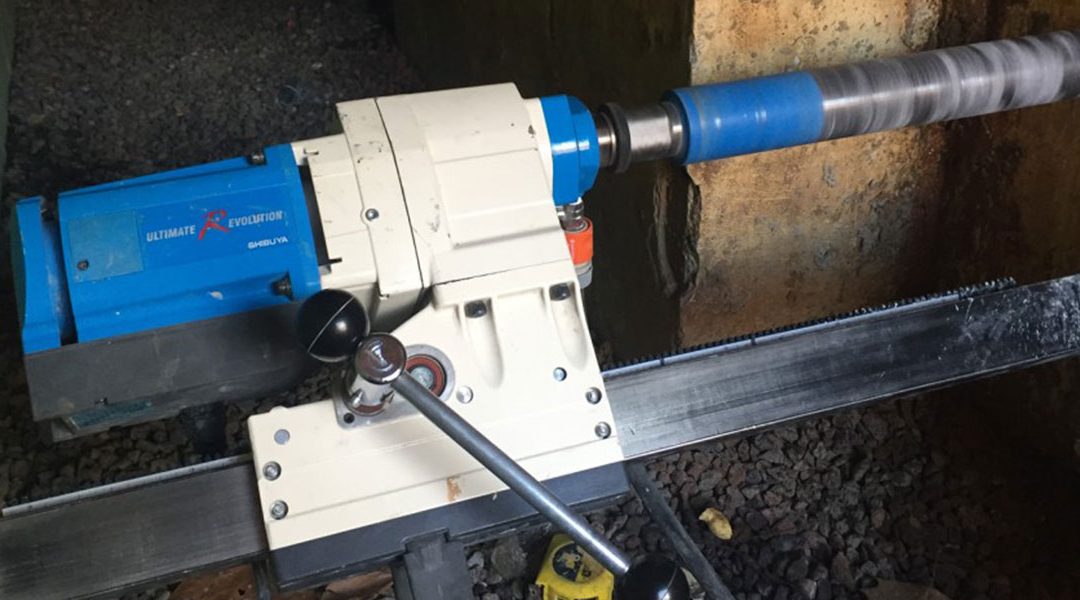
Imagine you’re on a bustling Melbourne construction site, and the next big task is running pipes and cables between floors. That’s where service riser core drilling comes in. It’s the precise way to bore vertical holes through slabs and walls so plumbing, electrical and HVAC systems can snake through a building.
In this guide I’ll walk you through everything about service riser core drilling, what it is, how it’s done, and why it matters for your Melbourne project. We’ll keep it friendly and jargon-free, just like we’re chatting over a coffee about the coolest trends on site.
What Is Service Riser Core Drilling?
So, what exactly is a service riser? In construction, a riser is basically a vertical shaft that carries services (electrics, water, ducts, etc.) from one level of a building to another. Core drilling is the method we use to create those shafts: workers use a diamond-tipped drill bit to drill perfectly round holes through concrete slabs or walls.
It’s much cleaner than smashing or chipping away concrete, and it leaves behind neat holes for your pipes or cables. Think of it as sculpting concrete to make way for the building’s vital services.
Doing this right is crucial in multi-story projects. A core-drilled hole might be only a few centimeters wide (for a single pipe) or up to a meter across (for a big service bundle or duct). Using a service riser core drilling approach means each hole is smooth, precise and exactly where it needs to be. There’s no doubt why it’s essential on major builds.
Give us a shout for expert service riser core drilling in Melbourne that keeps your project moving.
Why Core Drilling Rocks for Service Risers
Let’s talk about the benefits. You could hire a hammer drill or jackhammer, but those are noisy and crude. A core drill is like the Swiss Army knife of drilling, versatile and tidy. Here’s why I often suggest it:
- Clean, precise holes: Diamond bits drill cleanly, so your pipes slide in without fuss or extra chiseling. No cracks or chunked edges.
- Preserves the core (if needed): The hollow bit often pulls out a concrete core. Sometimes engineers test this sample for strength or quality. (Bonus: you don’t usually need it, but it’s a handy feature.)
- Versatile sizes: Bits range from tiny (10–20mm for cables) to huge (several hundred mm for big conduits). See table below for common sizes.
- All angles: You can drill straight down from a ceiling, up from the floor, or even at a tilt if the situation demands it. Some rigs even drill upside-down, underfoot, if you need a hole from underneath a slab.
- Less vibration: Compared to percussive methods, core drilling is smoother, especially when the rig is securely anchored. This means less risk of cracking nearby concrete or dislodging tiles.
Below is a quick reference for typical hole sizes and drill setups:
| Hole Diameter | Drill Rig / Bit Type | Common Use |
|---|---|---|
| 10–50 mm | Handheld electric core drill | Single cables or small pipes |
| 50–150 mm | Mounted electric core drill (mobile rig) | Standard riser pipes, cable bundles |
| 150–300 mm | Larger electric/hydraulic core rig | Multi-service risers, large pipe clusters |
| 300 mm+ | Stationary hydraulic rig (anchored) | Major service shafts, HVAC ducts, bulk penetrations |
This shows why core drilling is usually the best tool for service risers: it’s tailored to the hole size, and the machines can be set up for any building situation.
Tools and Techniques of Core Drilling
Equipment:
At heart, it’s a motor, a stand, and a diamond core bit. The motor spins the bit at the bottom; the stand keeps it steady and vertical. The bits – often 10–1000mm in diameter have metal bodies with diamond segments at the tip. Diamond is the only material tough enough to slice through reinforced concrete cleanly.
Water Supply:
You’ll notice a water hose hooked up to the drill. This isn’t for cooling you down – it cools the bit and keeps dust at bay. Wet drilling sprays water onto the bit, which prevents overheating and dramatically reduces airborne silica dust. On a Melbourne site, safety regs practically demand this. It’s a real win-win: less lung hazard and longer bit life.
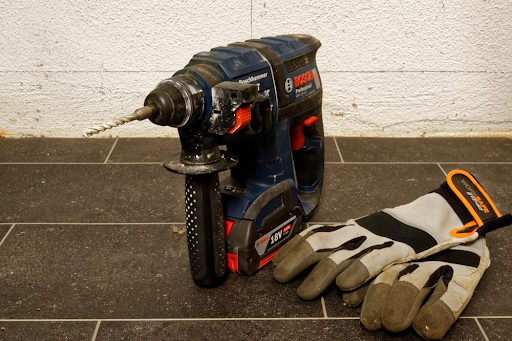
I often show apprentices pictures like this [Bosch impact drill and gloves] to emphasize safety and the right gear: always wear gloves, ear protection, and eye protection when drilling. The water hose might look like a tangle, but trust me, it’s doing the heavy lifting on dust control. Modern rigs also often have vacuum rings to suck up slurry for an even cleaner job.
Setup:
Before drilling, scan the area. Melbourne concreters use ground-penetrating radar (GPR) or service locators to find rebar, conduit, or pipes hiding under the surface. You definitely don’t want to drill into a gas line or live cable. Once clear, secure the drill stand. There are two ways:
- Bolt-down: We literally bolt the drill base into the concrete using expansion anchors. This is rock-solid.
- Vacuum stand: For quick jobs, a powerful vacuum suction pad can hold the stand in place. (WorkSafe notes that this is okay if the surface seals well and the vacuum is monitored, otherwise bolts are safer.)
Then position the bit, apply a trickle of water, and start the machine. High-torque, low-speed you don’t want to spin too fast or the bit will wear out prematurely. Push steadily and let the drill do the work.
Drilling:
Steady, controlled pressure is key. If there’s rebar (steel), the diamond will grind through it, but it can be tougher, so be patient. You’ll see a concrete cylinder (the core) stay inside the bit. When you reach full depth, stop and reverse the drill: the bit will pull out, often lifting the core out too. On a slab, sometimes the core falls through; on walls, it usually comes free.
Afterwards:
You’re left with a perfect hole. Sometimes it needs cleaning; a quick vacuum or hose rinse clears any slurry. If it’s a floor hole, debris drops through but keep an eye if there’s anything delicate below.
Planning and Safety – No Surprises
Never underestimate prep! On a Melbourne build, you need permits or council notifications for some work, especially if it’s a high-rise or historical site. You’ll fill in a Safe Work Method Statement (SWMS) for “high risk construction” , basically a plan documenting that you’ve done scans, risk assessments, etc.
Key safety tips I follow (and you should too):
- Scan first: Always GPR or service location. It’s amazing how many buried cables are forgotten in plans. Better safe than shocking.
- Secure the rig: We talked bolt vs vacuum. If using a vacuum, I always double-check the seal. That extra suction tank or regulator on big rigs is there so you have a few seconds to stop if power cuts – a critical safeguard.
- Watch for hazards: Dust (silica), noise, entanglement (keep hair, gear, and loose clothing away from the spinning bit). Melbourne regs mandate PPE and often breathing protection if ventilation is poor.
- Work area: Keep the whole area taped off. Falling chunks or a wandering core can injure someone.
- Electrical safety: If you’re drilling near conduits, it’s wise to shut off power or clearly mark live lines. Core bits drill through any metal, live or not.
- Working at height: If drilling a ceiling or floor from above, use guardrails and harnesses as needed. The high-rise skyline is no joke.
By following the WorkSafe Victoria guidelines and taking these steps, you avoid nasty accidents. In fact, WorkSafe recommends treating core drilling like any other “specialised equipment” task: if it can go wrong, plan how it won’t.
Local Melbourne Considerations
In Melbourne, we have a few local wrinkles:
- Concrete type: Older buildings may have brittle Victorian-era concrete or even stone. New slabs use modern mixes. Know what you’re drilling into. Diamond bits handle both, but drilling through granite aggregate can take longer than softer aggregate.
- Space constraints: Inner-city sites often have tight spaces. Smaller handheld rigs (with 10–20m hoses) are great for apartments or narrow sites. A busy CBD tower might use a big tracked drill with a stand.
- Noise hours: If you’re coring in an apartment building, council noise rules (usually off-hours restrictions) may apply. Core drilling is quieter than jackhammers, but still loud enough for a startled pigeon.
- Permits: For big penetrations (say, drilling basement walls), local councils sometimes need to inspect or approve. If the hole is near a footpath, traffic control may be needed. Factor this in, and always have an electrician or plumber on standby to remove any services.
- Weather: Water is used in drilling, so mud can be a slip risk. In rainy seasons, ensure good footing; in summer, the drill and water pump can run hot, so hydration for the crew is a must.
Overall, Melbourne’s building scene loves core drilling. Whether it’s a new office tower, a school upgrade, or a mall renovation, the precision and speed of core drilling save heaps of time. You’re literally slicing right through concrete like a hot knife through butter (if that knife were diamond-tipped).
Tips and Tricks
Here are a few insider tips from years on the tools:
- Prescan in 3D: Modern teams sometimes use 3D scanning or imaging in addition to GPR. It’s like a CT scan of the slab and can show rebar grids visually. If your project is high-stakes (say, a heritage building), it’s worth the investment.
- Dry vs Wet: Most core drilling in construction is wet (with water). However, small handheld bits can do dry coring in non-ductile concrete if fitted with a dust extractor shroud. In a quiet interior job, that might be handy. But in Melbourne, with our strict dust laws, we usually stick with wet.
- Minimize slurry: If you’re working indoors, slurry can be messy. Attach a vacuum ring around the bit. Many rigs have these rings that connect to a shop-vac. It reduces cleanup time to nearly zero.
- Watch the clock: Core drilling isn’t super fast on big holes. A 100mm hole might take a minute or two; a 300mm hole could be 10–15 minutes of actual drilling. Factor setup and removal in your schedule. On a 3m slab, depth matters: some rigs struggle with very deep cores, so check bit length vs slab thickness.
- Multiple holes: If you have a bank of holes (like many bathrooms on each floor), do them logically: either top-down so debris falls, or ensure someone clears cores between floors to avoid accumulations.
- Emergency plan: Keep first aid kits handy. And for working alone (as Aussie Safety guidelines say, it’s riskier), use radios or check-ins every 30 mins if you’re solo.
These little details can make the difference between a smooth drill day and a frustrating one.
Conclusion
So that’s the lowdown on Service Riser Core Drilling in Melbourne. It’s a fascinating mix of technology and technique drilling perfectly round paths through solid concrete so buildings can breathe with plumbing and power. Whether you’re a project manager planning the next high-rise or a curious homeowner watching tradesmen at work, understanding core drilling gives you insight into what’s happening behind the walls.
In short: core drilling is safe, precise, and flexible. Follow the safety rules (WorkSafe Victoria’s guidelines cover it all), prep with scans, and use the right gear. That way, the holes you drill become the smooth arteries of your building’s vital systems.
Ready to make some holes? Give us a shout for expert service riser core drilling in Melbourne that keeps your project moving. Whether you have a single floor penetration or dozens of multi-story shafts, a well-executed core drill job can save time and headaches. And remember drilling a concrete hole isn’t just a step in construction, it’s making way for everything from your morning coffee to emergency sprinklers.
We’ve covered it all now, go forth and drill with confidence!
FAQs
What is a service riser core drilling?
It’s drilling a vertical hole through concrete to create a service riser—a shaft for pipes, cables, or ducts between floors. It allows clean, precise openings for plumbing and electrical systems.
How large can the holes be?
Core drill bits can range from a few millimetres up to 1000mm+. Common service riser sizes are 50–300mm, while larger holes often require hydraulic rigs and slab-mounted setups.
Is core drilling noisy or messy?
It’s quieter and cleaner than jackhammering, producing a steady drilling hum instead of loud impacts. Some water slurry is created, but proper control methods keep the mess minimal.
How long does drilling take?
Small holes can take just a couple of minutes, while larger ones may take 10–15 minutes plus setup time. For planning, allow around an hour per large hole including prep and cleanup.
What if I hit pipes or rebar?
Scanning helps avoid this, but if you hit something, stop immediately. Rebar can usually be drilled through, but pipes or major obstructions may require relocation or manual removal.
Do I need a permit?
Usually not for standard service holes, but regulations can vary. Large structural penetrations or restricted work hours may require approvals or compliance with site safety plans.